
Christianity Compared with Islam
Join us in an exploration of Christianity and Islam side-by-side to discover the truth.
Latest CCI Articles






CCI Article Categories




Key Sources
Letters of Paul are scripture
Regard the patience of our Lord as salvation; even as our beloved brother Paul also, according to the wisdom given to him, wrote to you, as also in all of his letters, speaking in them of these things. In those, there are some things that are hard to understand, which the ignorant and unsettled twist, as they also do to the other Scriptures, to their own destruction.
One God, Three Persons
Jesus came to them and spoke to them, saying, “All authority has been given to me in heaven and on earth. Go and make disciples of all nations, baptising them in the name of the Father and of the Son and of the Holy Spirit, teaching them to observe all things that I commanded you. Behold, I am with you always, even to the end of the age.” Amen.
Matthew 28:19 does not say ‘names’ in the plural, but rather ‘the name’ in the singular. So, the three persons have a single essence of identity. This is the meaning of Triunity – one God, eternally existent in three Persons who have the same, single essence of deity.
Muhammad had sex with Aisha when she was nine years old
Narrated `Aisha: that the Prophet married her when she was six years old and he consummated his marriage when she was nine years old, and then she remained with him for nine years (i.e., till his death).
Written by the Spirit through human agency
Every Scripture is God-breathed and profitable for teaching, for reproof, for correction, and for instruction in righteousness,
The Qur'an misunderstands the Incarnation
The Originator of the heavens and the earth! How can He have a child, when there is for Him no consort, when He created all things and is Aware of all things?
The Qur'an mistakenly challenges the incarnation on the grounds that Allah has no wife ('partner') and doesn't need to procreate as we do. This shows a significant misunderstanding in Islam about Jesus and his incarnation. Christ is not created, nor procreated.
Jesus, the only way to the Father
Jesus said to him, “I am the way, the truth, and the life. No one comes to the Father, except through me.
One God
Hear, Israel: the LORD is our God. The LORD is one. You shall love the LORD your God with all your heart, with all your soul, and with all your might.
Scripture is abundantly clear that there is one and only one God. The three different persons of the Trinity are one not only in purpose and in agreement on what they think, but they are one in essence, one in their essential nature. In other words, God is only one being. There are not three Gods. There is only one God. (Grudem)
Before Abraham was born
Jesus said to them, “Most certainly, I tell you, before Abraham came into existence, I AM.”
John 8:41 “Abraham did not want to kill me”
John 8:56 “Your father Abraham rejoiced at seeing my day”. Jesus could have used ‘Emen’ (past tense) ‘Before Abraham was, I was’, But he used ‘Eimi’ (present)
CCI Booklets
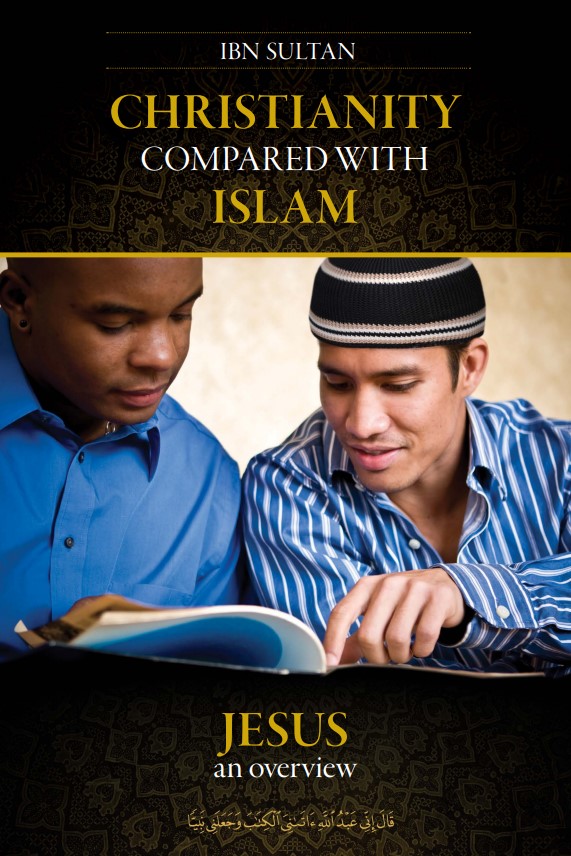
Jesus: an overview
Have you ever wondered why you believe what you believe? How do you know what you believe is true? Is it just...
Son of God: what do the Qur'an and the Bible say?
The Bible identifies Jesus as the 'Son of God'. But what exactly does it mean to call Jesus by this...
Crucifixion: what do the Qur'an and the Bible say?
Was Jesus really crucified, or did another die in his place? Did Jesus die at all? This booklet explores these...